
For many older adults, bathing is the daily task that quietly becomes the hardest. Getting in and out of the tub takes balance and leg strength, wet floors are slippery, and standing under the shower for several minutes can be tiring. Some seniors start skipping baths simply because they feel nervous. With thoughtful support and a few changes to the bathroom, personal care at home can turn bath time back into something your parent feels comfortable with, and even looks forward to.
Why Bathing Becomes Harder with Age
Several changes happen at once as people age. Muscles weaken, joints stiffen, and balance becomes less reliable. Medications can cause dizziness. Vision changes make it harder to judge the edge of a tub. Many older adults also feel the cold more easily, so a drafty bathroom can make bathing unpleasant.
Embarrassment plays a part too. A parent who has always bathed privately may feel uneasy asking for help, even when they need it. Recognizing these feelings helps families approach the subject with patience.
Setting Up Safer Bathrooms
Small changes can make a big difference. Before a caregiver begins helping, consider these updates:
- Grab bars beside the toilet and inside the tub or shower
- Non-slip mats inside the tub and on the floor outside it
- A shower chair or tub transfer bench so your parent can sit while washing
- A handheld showerhead that brings water to your parent rather than the other way around
- A raised toilet seat for easier sitting and standing
- Bright, even lighting and a night light for evening use
Set the water heater no higher than 120 degrees Fahrenheit to help prevent burns. Keep soap, shampoo, and towels within easy reach so your parent never has to stretch or twist.
Choosing Your Parent's Best Time
Bathing goes more smoothly when it fits your parent's natural rhythm. Some people feel most alert and steady in the morning. Others prefer a warm bath in the evening to help them relax before bed. Following a lifelong habit can reduce resistance and make the experience feel familiar.
If your parent tires easily, schedule bathing on days without other demanding activities, such as doctor appointments or outings. Many seniors don't need a full shower every day, so two or three supported baths a week, with washing up at the sink in between, can work well.
Keeping Your Parent Warm
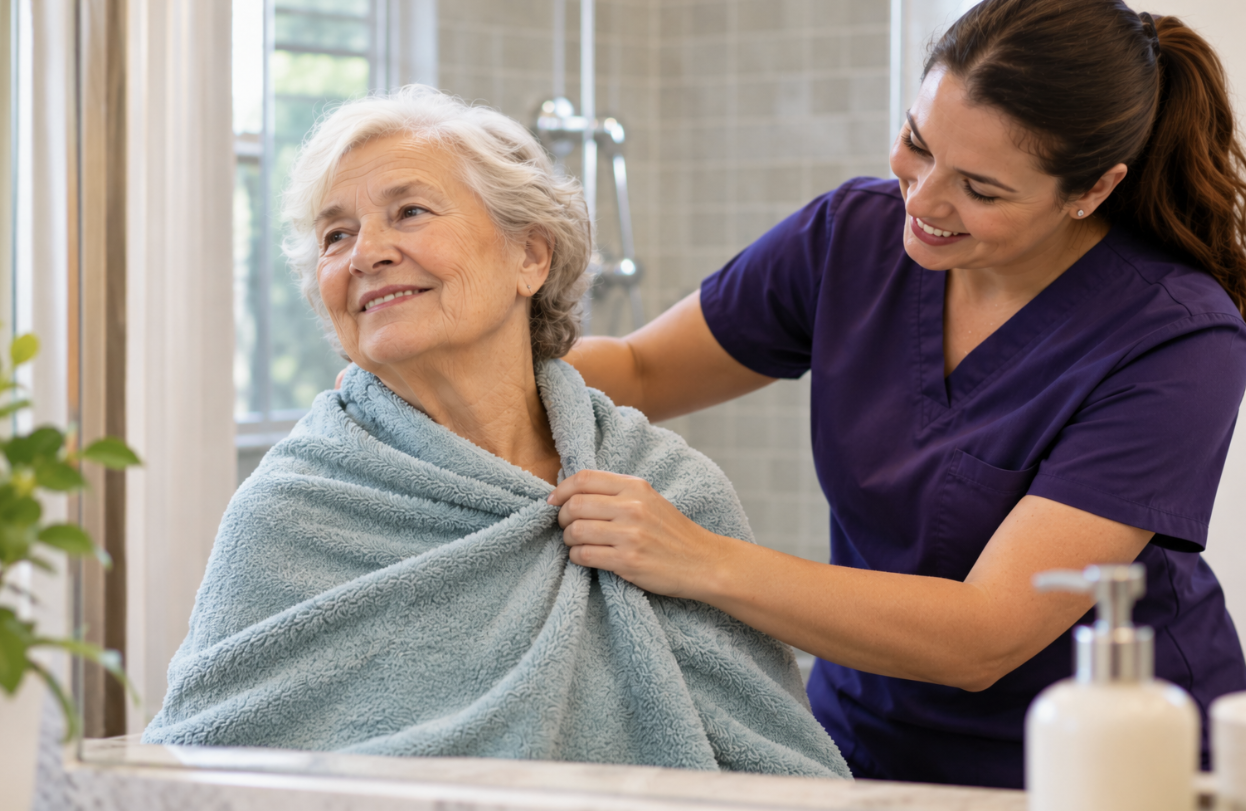
Feeling chilly is one of the most common reasons seniors dislike bathing. A caregiver can warm the room beforehand, have a large towel or robe ready, and keep parts of the body covered while washing others. Warming towels in the dryer is a simple touch many seniors appreciate. Moving quickly from the bath to warm clothing helps your parent stay comfortable.
Encouraging Independence
Good caregivers help only as much as needed. If your mother can wash her face, arms, and hair while seated, the caregiver lets her. They might handle her back, feet, and the parts that are hard to reach. Doing as much as possible on their own helps seniors keep strength and confidence.
Caregivers also explain each step before they do it, so nothing feels sudden or surprising.
Respecting Privacy
Privacy matters at every age. Caregivers close doors and blinds, use towels to keep your parent covered, and give your parent time alone when it's safe to do so. If your parent would feel more at ease with a caregiver of the same gender, most agencies try to honor that preference.
When Full Baths Aren't Possible
Some days, a full bath or shower may be too tiring. On those days, a sponge bath at the sink or in a chair can keep skin clean and fresh. No-rinse cleansers and shampoo caps offer other options. The goal is comfort and cleanliness, not a rigid schedule. Your parent's doctor can advise on how often bathing is needed for skin health.
Watching for Skin Changes
Bath time is also a good opportunity to notice changes. Caregivers may spot dry patches, redness, bruises, or sores that your parent hasn't mentioned. They can share these observations with the family so concerns can be raised with your parent's doctor. Applying lotion after bathing helps prevent dry, itchy skin.
Making Bath Time Pleasant
Small comforts can transform the experience. Play your parent's favorite music, use a soap with a familiar scent, or offer a cup of tea afterward. Some seniors enjoy a few minutes to relax in a warm robe before getting dressed. When bathing feels pleasant rather than stressful, many seniors become more willing to accept help.
Getting Support
If your parent has been avoiding baths, struggling in the shower, or nervous about falling, help is available. Personal care at home provides trained caregivers who assist with bathing safely and respectfully, following your parent's routines and preferences. An in-home assessment can identify bathroom safety needs and create a plan that helps your parent feel clean, comfortable, and confident again. Ask an agency how personal care at home could fit around your parent's preferred bathing schedule.
If you or an aging loved one are considering hiring Personal Care at Home in Manhattan Beach, CA, please call Mom's Home Care and talk to our friendly, knowledgeable staff. Our number is 323-244-4789.